Juggling clinical rotations at local healthcare facilities, rigorous university schedules, and busy educator timetables across San Joaquin County often leaves professionals with very little margin for rigid classroom hours. American Heart Association Self-Guided Learning provides an adaptable alternative for individuals in Stockton who need to complete mandatory certification requirements without sitting through conventional multi-hour lectures. By blending independent online cognitive modules with scheduled hands-on skills practice, this format accommodates those working irregular shifts while still maintaining the practical verification standards demanded by medical employers, clinics, and school districts throughout the region.
AHA Self-Guided Learning gives eligible learners a way to complete educational material independently while still addressing applicable hands-on skills requirements. The right course depends entirely on the learner’s specific professional role and the compliance guidelines set by their employer, school, or organization.
What is AHA Self-Guided Learning?
Self-guided learning represents a structured blended-learning approach established by the American Heart Association to streamline how students acquire vital life support knowledge. Instead of completing all coursework in a traditional lecture hall, learners move through the online educational portion at their own pace using a computer or mobile device. This initial digital segment covers core concepts, emergency response chains, and algorithm rules.
However, completing the online portion is only the first phase. Because emergency cardiac care relies heavily on physical competence, these courses require students to complete a hands-on skills session with an authorized instructor.
The standard process typically follows a clear path:
- Select the appropriate course corresponding to your job description.
- Complete the online cognitive modules independently.
- Schedule and attend a hands-on practice and testing session at an authorized training facility.
- Receive your official American Heart Association eCard upon successful completion of all cognitive and physical requirements.
This structure differs fundamentally from fully online-only programs, which frequently lack the supervised physical testing required by local hospitals, nursing programs, and emergency medical services.
Course-Specific Training Options in Stockton
Different career paths require specialized emergency training protocols. Selecting the proper curriculum ensures that your certification aligns with professional standards across local medical offices, schools, and community organizations.
Basic Life Support (BLS) Classes
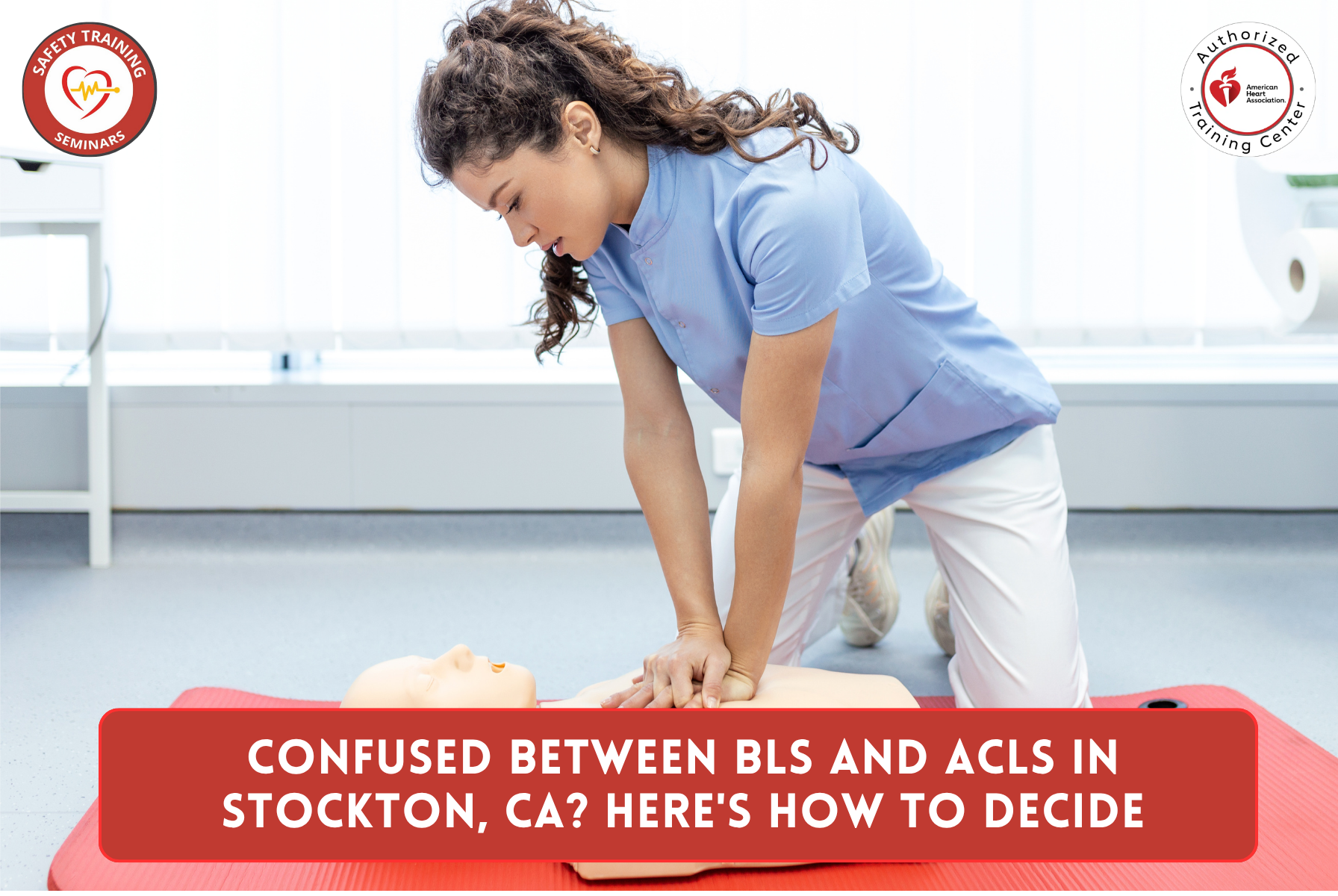
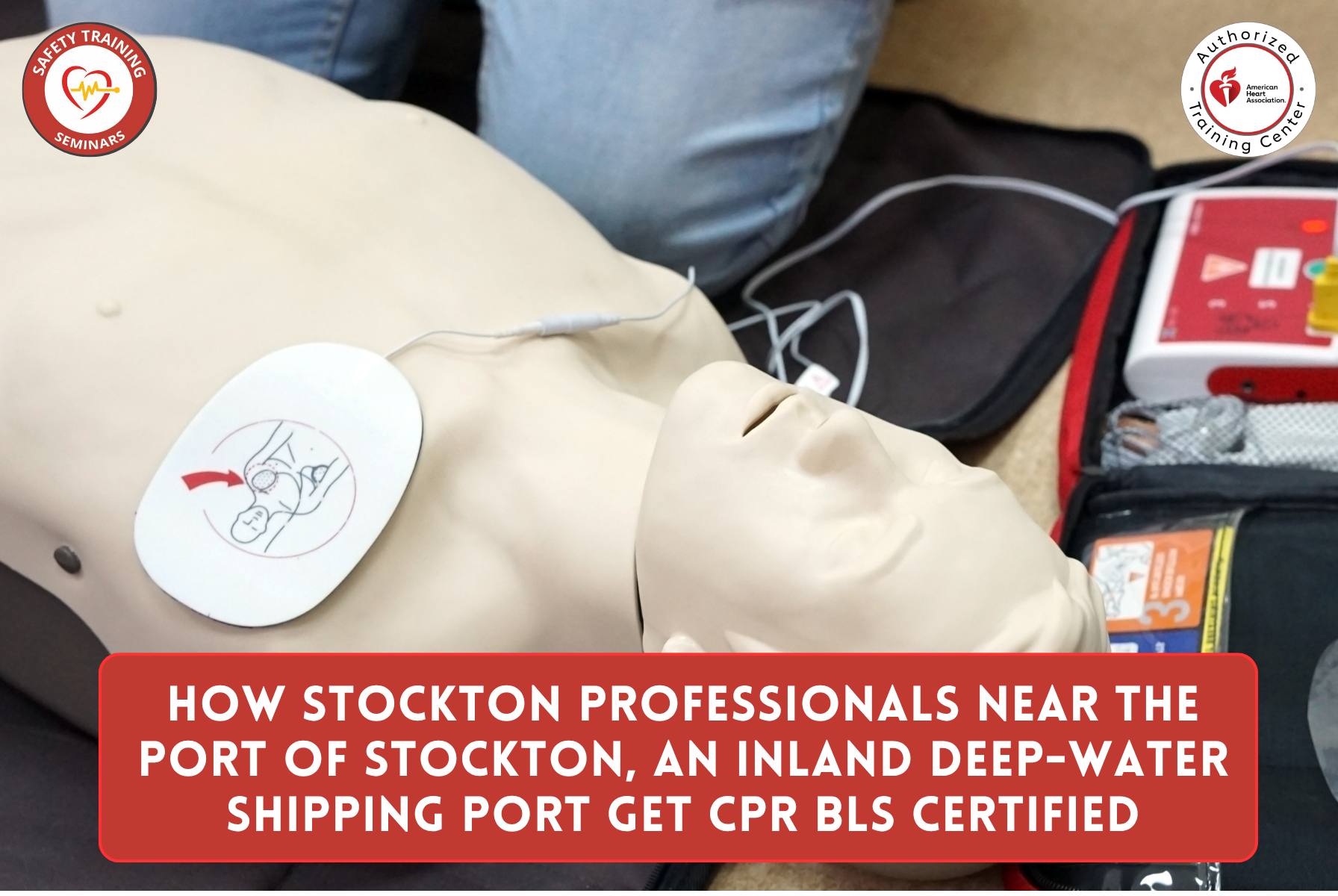
Basic Life Support focuses heavily on high-quality chest compressions, multi-rescuer team dynamics, and automated external defibrillator use for adult, child, and infant patients. BLS certification is widely expected for individuals entering clinical fields. Professionals such as registered nurses, nursing students, physical therapists, dental hygienists, and emergency medical technicians frequently rely on BLS and CPR classes in Stockton to fulfill clinical onboarding mandates and hospital credentialing rules.
Advanced Cardiovascular Life Support (ACLS)
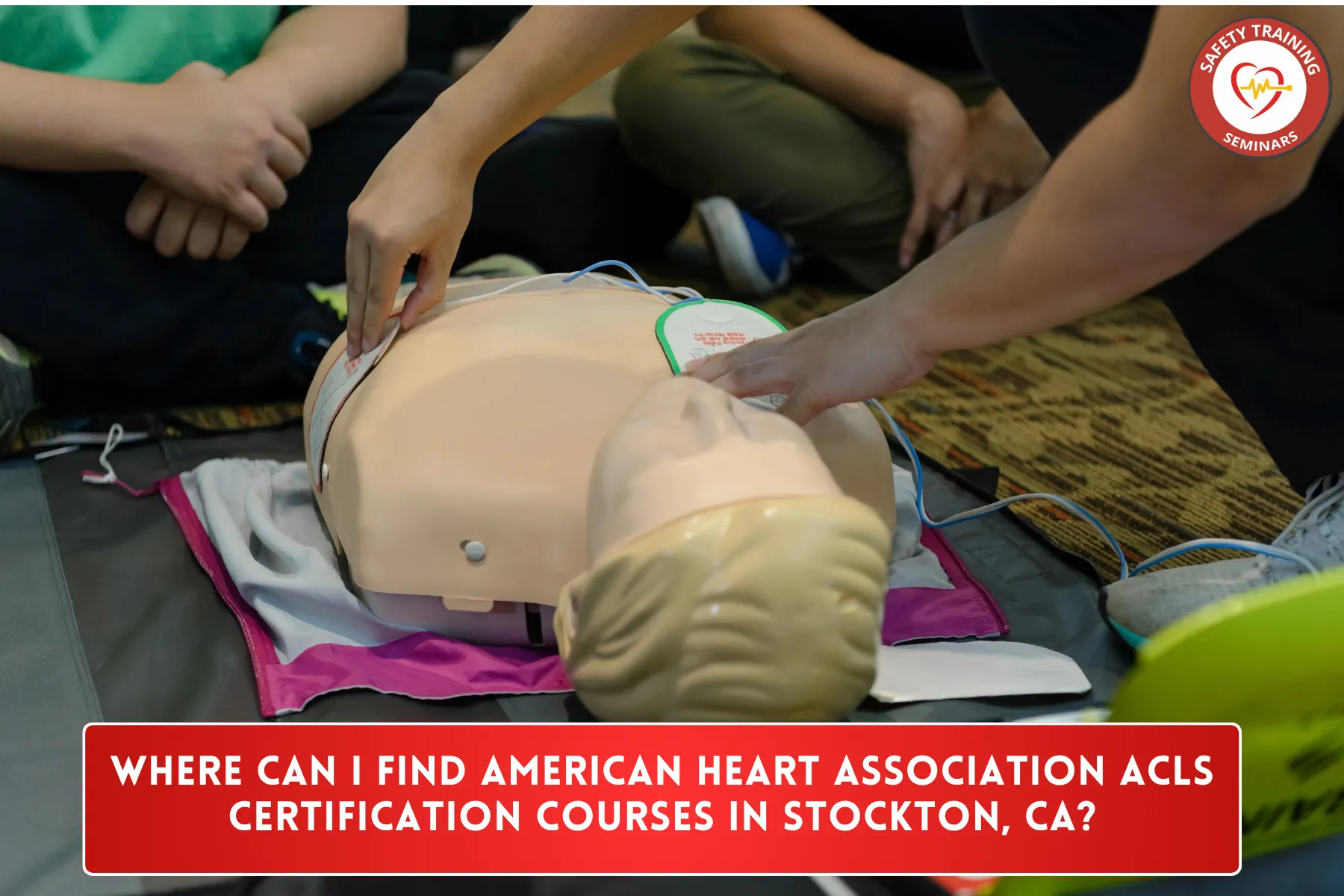
Advanced Life Support is designed for experienced healthcare personnel who manage complex cardiovascular emergencies, cardiac arrest scenarios, and peri-arrest situations. Participants review megacode management, ECG rhythm identification, and pharmacological interventions. Physicians, critical care nurses, and specialized paramedics frequently search for local ACLS and PALS training options when updating their advanced certifications for hospital employment or emergency transport roles.
Pediatric Advanced Life Support (PALS)
Pediatric Advanced Life Support centers on the systematic assessment and stabilization of critically ill or injured infants and children. The curriculum addresses respiratory emergencies, shock management, and pediatric resuscitation algorithms. Healthcare workers operating in pediatric clinics, urgent care centers, and emergency departments look for specialized PALS programs that address the unique anatomical and physiological needs of younger patients.
CPR, AED, and First Aid Training
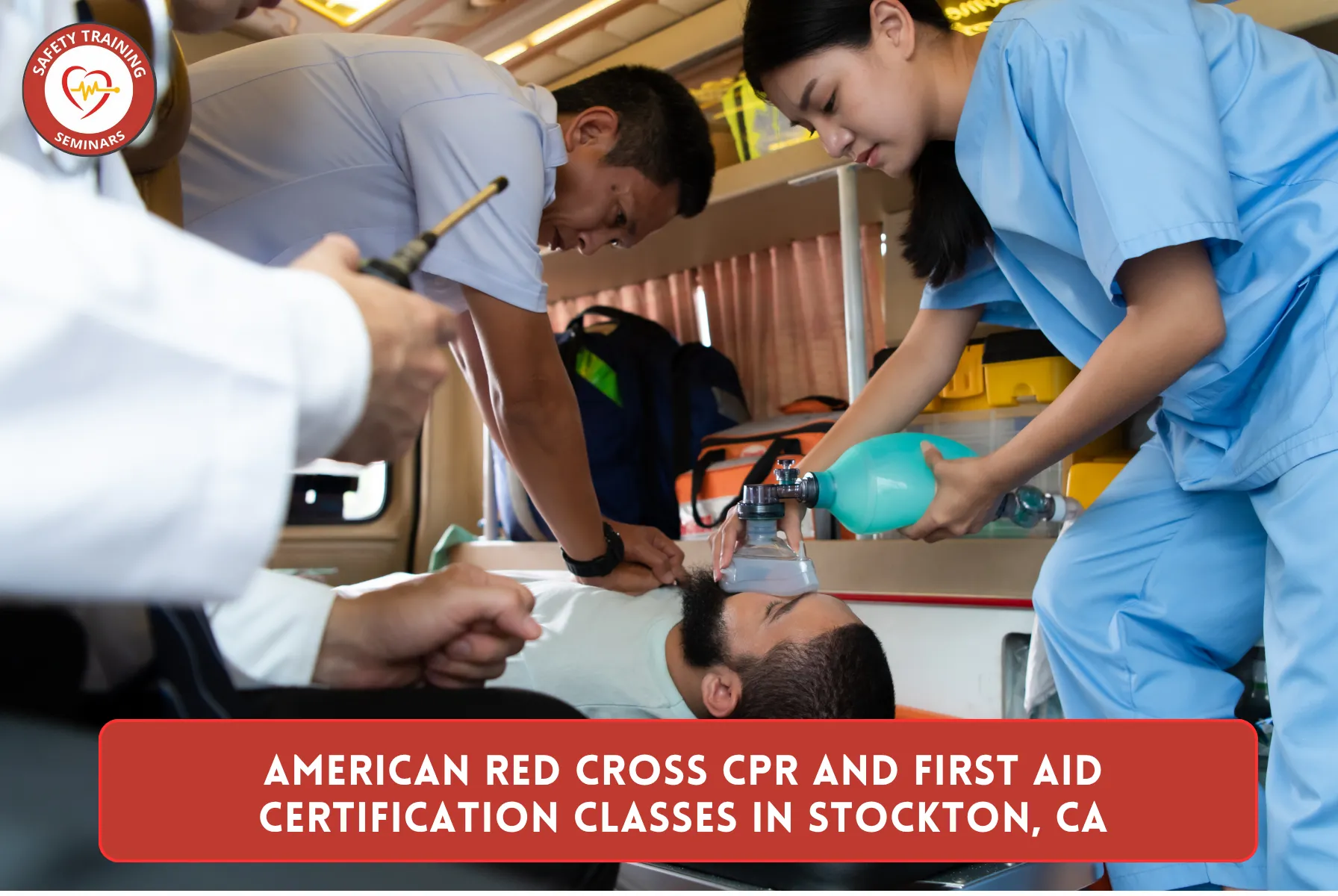
Non-clinical professionals generally require standard community or workplace safety certifications rather than advanced clinical tracks. Public school teachers, childcare providers, fitness instructors, corporate office safety teams, and community volunteers often complete CPR and First Aid courses near [Stockton] to comply with state employment mandates, OSHA regulations, or athletic association requirements. These sessions focus on recognizing sudden cardiac arrest, relieving foreign-body airway obstructions, and managing common workplace injuries until professional help arrives.
How to Choose the Right Course
Selecting an incorrect curriculum can waste time and lead to compliance issues with your employer or educational institution. Reviewing standard training categories helps clarify which option matches your background.
| Course Category | Primary Target Audience | Typical Requirements & Focus |
| BLS | Healthcare personnel & clinical students | High-performance CPR, team dynamics, AED use, bag-mask ventilation |
| ACLS | Emergency and critical care medical staff | Advanced resuscitation algorithms, ECG interpretation, pharmacology |
| PALS | Pediatric healthcare providers | Systematic pediatric assessment, stabilization, resuscitation |
| CPR / AED | General public, workplace employees, coaches | Basic compression techniques, AED operation for lay rescuers |
| First Aid | Teachers, childcare staff, general workers | Injury assessment, bleeding control, medical emergency management |
Always verify your specific professional prerequisites directly with your human resources department, clinical coordinator, or licensing board before registering for any training track.
Self-Guided vs Online-Only vs Traditional Training
Understanding the structural differences between instruction methods prevents costly enrollment mistakes.
- Self-Guided Learning splits the curriculum into two parts. You complete the theory online at your own speed and finish with a mandatory hands-on verification test. This model provides scheduling flexibility for busy professionals without bypassing physical competency requirements.
- Traditional Classroom Training delivers all instruction and practice inside a physical classroom under direct instructor supervision. While effective for learners who prefer structured lectures, it requires adherence to fixed time slots.
- Online-Only Programs rely exclusively on digital modules without any physical skills testing. Many healthcare employers, hospitals, and regulatory bodies do not accept completion documents from online-only courses because they lack verified hands-on practice.
Local Training Access in San Joaquin County
Professionals and residents throughout the region frequently balance complex transit schedules, commuting along major corridors like Interstate 5 and Highway 99 while managing demanding shifts in healthcare or education. Having an accessible local option simplifies fulfilling regulatory mandates. Whether you commute from nearby communities like Lodi, Manteca, or Tracy, or work directly within local medical centers and school districts, completing your educational modules online before attending a local session minimizes time away from work and personal commitments.
Safety Training Seminars
For learners seeking professional, structured certification pathways, completing requirements through an authorized provider is essential. Safety Training Seminars operates a dedicated local training facility in the area to help students finalize their certification requirements.
The Stockton training center is located at:
5250 Claremont Avenue, Suite 212, Stockton, CA 95207
This location provides a streamlined environment for completing required hands-on skills tests. Before registering, students should review the specific course descriptions on the Safety Training Seminars training location page to determine whether a blended self-guided format or an alternative classroom schedule best fits their professional timeline.
Why Choose Safety Training Seminars
Choosing the right provider for your life support training impacts the quality of your preparation and the official acceptance of your credentials.
- Official AHA Curriculum: All programs adhere strictly to current American Heart Association guidelines, ensuring your provider eCard meets standard employment criteria.
- Streamlined Scheduling: The blended self-guided format allows you to study cognitive materials on your own schedule before attending a focused, efficient skills session.
- Experienced Instruction: Practice sessions are supervised by trained instructors dedicated to providing clear feedback on compression depth, rate, and ventilation technique.
- Transparent Verification: Official AHA course completion eCards are typically processed quickly after successful completion of both online and hands-on components.
Frequently Asked Questions
What does AHA Self-Guided Learning involve?
AHA Self-Guided Learning involves completing the cognitive learning coursework online through an independent digital platform, followed by a mandatory hands-on skills practice and testing session with an authorized instructor.
Can nursing students in Stockton use self-guided BLS courses?
Yes, nursing students and allied-health personnel frequently use self-guided BLS training to fulfill clinical rotation prerequisites, provided their specific academic program accepts blended learning formats.
Are hands-on skills tests included with self-guided programs?
Yes, physical skills testing is a mandatory component of AHA certification courses and must be completed in person at an authorized training site after finishing the online module.
Why should I avoid online-only CPR courses?
Many healthcare employers, nursing schools, and regulatory bodies reject fully online-only courses because they do not include supervised physical practice on manikins, which is required to verify actual motor skills.
Do I need to confirm course requirements with my employer first?
Yes, requirements vary significantly by profession and organization. Always verify whether your workplace expects basic BLS, advanced ACLS, or standard workplace CPR before you enroll.
Conclusion
Navigating professional compliance requirements does not have to disrupt your weekly routine. By utilizing American Heart Association Self-Guided Learning, eligible workers and students can manage their theoretical coursework independently while meeting essential hands-on competency standards. Whether you are updating credentials for a clinical career or fulfilling workplace safety mandates in the local area, choosing the correct path ensures your certification is fully accepted. Review your organization’s specific guidelines, explore the available nearby BLS classes for healthcare professionals through Safety Training Seminars, and complete your certification with confidence.