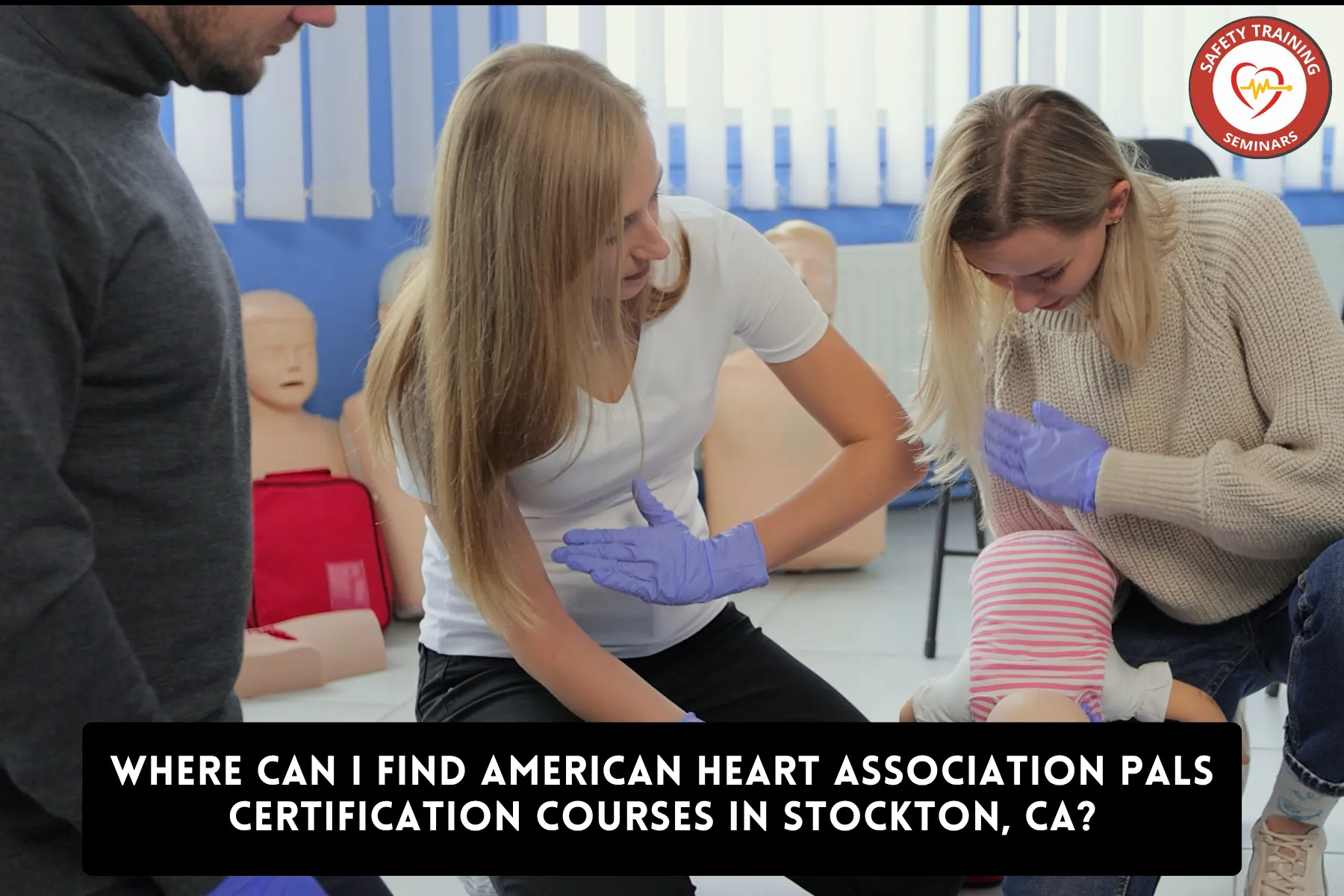
Healthcare professionals seeking Pediatric Advanced Life Support (PALS) certification in Stockton, CA, can explore local training through Safety Training Seminars. PALS courses prepare qualified healthcare providers to recognize and respond to life-threatening emergencies involving infants and children. The Stockton training option is worth considering if you need an American Heart Association (AHA) PALS course for your clinical role.
The listed training center address is 5250 Claremont Avenue, Suite 212, Stockton, CA 95207. Before registering, review the Stockton PALS certification course page for current course information and confirm that the training meets your employer’s requirements.
What Does an AHA PALS Course Teach?
PALS training focuses on the assessment and management of seriously ill or injured pediatric patients. Unlike a basic CPR course, it addresses more advanced clinical situations, including respiratory distress, shock, cardiac arrest, and cardiac rhythm disturbances.
Participants learn a structured approach to pediatric assessment, early recognition of deterioration, resuscitation principles, and effective teamwork during emergencies. Practical scenarios help participants apply their knowledge in situations that resemble the demands of clinical care.
PALS is particularly relevant to professionals whose responsibilities include responding to pediatric emergencies. The exact course prerequisites and completion requirements should be checked with the training provider before enrollment.
Who Should Consider PALS Certification in Stockton?
PALS training may be appropriate for healthcare professionals who provide emergency or critical care to infants and children. Depending on workplace responsibilities, this can include:
- Registered nurses in pediatric or intensive care settings.
- Physicians involved in emergency medicine or pediatric care.
- Paramedics and other emergency medical personnel.
- Healthcare professionals who participate in pediatric resuscitation teams.
- Clinical staff whose employers require an AHA PALS Provider course completion card.
Not every healthcare position requires PALS. Some employers require Basic Life Support (BLS), Advanced Cardiovascular Life Support (ACLS), or instead other credentials. Check your job description, hospital policy, or employer’s training requirements before selecting a course.
How to Choose the Right PALS Class
When comparing PALS classes in Stockton, focus on whether the course fits your professional requirements and schedule rather than choosing based on location alone.
Verify the credential. Confirm that the course provides the AHA PALS credential requested by your employer or licensing-related organization.
Compare learning formats. Ask whether the class is fully instructor-led or uses blended learning, with online coursework followed by an in-person skills session. Confirm the exact format available for your selected date.
Understand the time commitment. PALS training may involve preparation, knowledge assessment, skills practice, and course completion requirements. Ask the provider how much time you should allow for each component.
Review the registration details. Check the current schedule, fees, cancellation policy, and any required pre-course work before paying.
Confirm completion requirements. Make sure you understand what you must complete to receive the course completion card and whether your employer accepts that credential.
These checks can help you select a course that fits your needs without assuming every PALS class has identical requirements.
Preparing for Your PALS Training
Preparing in advance can make your training experience more productive. PALS involves clinical concepts and decision-making, so reviewing relevant material before class may help you feel more confident.
Before your course:
- Read any registration instructions and complete required pre-course assignments.
- Review pediatric CPR principles and relevant BLS knowledge.
- Familiarize yourself with the course’s assessment and resuscitation topics.
- Confirm the location, arrival instructions, and any materials you need to bring.
- Contact the training provider if you have questions about prerequisites or skills testing.
If you are taking PALS because of a new job or a workplace deadline, allow enough time for preparation and completion. Do not assume that registration alone Fulfill your employer’s certification requirement.
Is PALS Different From BLS or ACLS?
Yes. These courses address different levels and areas of resuscitation training.
| Course | Main focus |
| BLS | Foundational CPR, use of an AED, and basic life-support skills |
| ACLS | Advanced management of cardiovascular emergencies, primarily in adult patients |
| PALS | Recognition and management of serious pediatric respiratory and cardiovascular emergencies |
The appropriate course depends on your clinical duties and the credential requested by your employer. Some professionals need more than one certification. If you are unsure which course to take, prove the requirement with your supervisor or credentialing department before enrolling.
Finding a Local PALS Training Option in Stockton
For healthcare workers in Stockton, choosing a local course can help simplify planning around work shifts, clinical responsibilities, and study time. Safety Training Seminars lists PALS training for the area, giving prospective students a place to start when comparing course details.
Stockton is part of San Joaquin County, and healthcare professionals may have different commuting needs depending on where they live and work. Rather than assuming a location is convenient for every student, check the training address and travel arrangements before confirming registration.
Review the current course listing, ask about available formats, and verify the date and completion requirements directly with the provider. If you need certification for a specific workplace, keep your employer’s instructions available while comparing options.
Frequently Asked Questions
How do I find a PALS certification course in Stockton, CA?
Start with the local Safety Training Seminars PALS course page. Review the current course details and verify that the offering meets the credential requirements of your employer.
Is PALS certification the same as CPR certification?
No. CPR is a foundational resuscitation skill, while PALS covers a broader approach to pediatric emergency assessment and management. The appropriate training depends on your professional role.
Can nurses take PALS training?
Yes. Nurses who care for critically ill children or participate in pediatric emergency response may need PALS training. Requirements vary by employer and position.
Do I need BLS before taking PALS?
Prerequisites and preparation requirements can vary by course. Check the current provider instructions and confirm whether your existing BLS training must be current before enrolling.
How long does PALS certification remain valid?
AHA PALS Provider course completion cards are generally valid for two years. Check the expiration date on your card and your employer’s renewal policy to determine when you need to renew.
What should I check before registering?
Confirm the credential offered, course format, schedule, fees, prerequisites, skills assessment requirements, and whether the completion card satisfies your employer’s requirements.
Take the Next Step Toward PALS Certification
Choosing the right PALS course begins with understanding your clinical responsibilities and confirming the credential you need. Healthcare professionals in Stockton can use the local Safety Training Seminars course listing to review training information and determine whether the available option fits their requirements.
Before registering, confirm the latest course details and any workplace-specific requirements. Taking these steps can help you prepare for pediatric emergency training with a clear understanding of what the course involves and what you need to complete.